
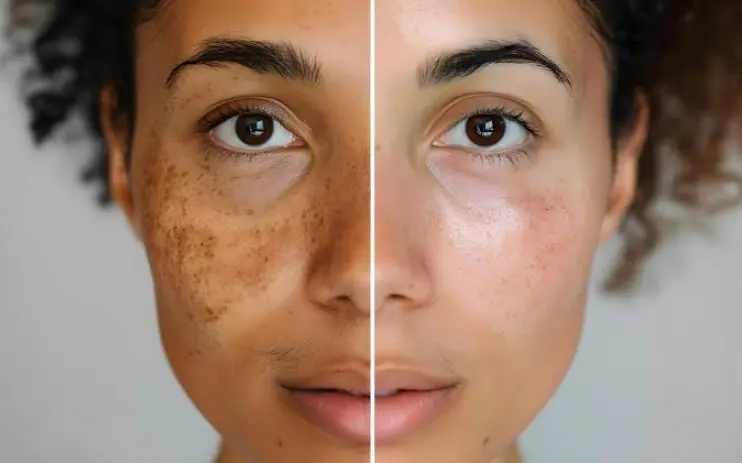

Korean dermatology can be suitable for skin of color when treatments are individually selected by a qualified dermatologist. Pigmentation diagnosis, skin tone, laser wavelength, treatment settings, and post-treatment care all affect safety. Patients should choose providers experienced with their skin type and discuss hyperpigmentation risks before treatment.
KoreaSkinClinic.net
Choosing Korean dermatology for skin of color can be a useful option for international patients seeking treatment for pigmentation, melasma, acne marks, uneven skin tone, or other cosmetic concerns. However, the safest approach is not to choose a laser simply because it is popular in Korea. Skin of color can respond differently to energy-based treatments, and the correct procedure depends on the diagnosis, skin tone, treatment target, laser parameters, and the dermatologist’s experience with similar skin types.
The American Academy of Dermatology (AAD) specifically warns that darker skin is more susceptible to burns and dark marks after laser treatment. It recommends working with a board-certified dermatologist who has experience treating darker skin with lasers. This makes individualized diagnosis and conservative treatment planning particularly important for international patients traveling to Seoul.
Table of Contents
Is Korean Dermatology Safe for Skin of Color?
Korean dermatology can be appropriate for patients with skin of color, but laser treatment should be individualized rather than selected by skin concern alone. Patients with medium-to-dark skin may have a higher risk of post-inflammatory hyperpigmentation or hypopigmentation after skin injury. A dermatologist should identify the cause of pigmentation, evaluate skin tone and sensitivity, select an appropriate device and settings, and establish a realistic recovery and maintenance plan.
The goal should not be to find the strongest laser.
The goal is to find the right treatment with an appropriate risk-benefit balance for your skin.
What Does “Skin of Color” Mean in Dermatology?
“Skin of color” is a broad clinical term covering many different complexions and ethnic backgrounds. It can include people of Asian, African, Middle Eastern, Latino, Mediterranean, Native American, and mixed ancestry.
It is important to understand that skin color is not a diagnosis.
Two patients with the same general complexion may have very different:
- Melanin levels
- Pigmentary responses
- History of inflammation
- Melasma patterns
- Scarring tendencies
- Sensitivity to laser energy
- Risk of post-inflammatory hyperpigmentation
DermNet notes that skin of color has greater epidermal melanin and can be more prone to pigmentary changes following injury or inflammation. Melanin can also interact with laser energy, increasing the potential for unwanted effects when treatment is not appropriately selected.
That is why a dermatologist should assess the individual skin, rather than relying solely on ethnicity or a general skin-color category.
Why Pigmentation Is a Major Concern for Skin of Color
One of the most important differences in treating skin of color is the tendency for inflammation or injury to leave behind visible pigment changes.
This can happen after:
- Acne
- Eczema
- Cuts or burns
- Insect bites
- Irritating skincare products
- Chemical peels
- Microneedling
- Laser procedures
- Other inflammatory skin conditions
The resulting condition is often called post-inflammatory hyperpigmentation (PIH).
The AAD explains that PIH occurs when inflammation or injury stimulates increased melanin production. In darker skin tones, these marks can be particularly noticeable and may take months to fade.
This creates an important treatment principle:
A procedure designed to remove pigmentation can itself cause pigmentation if the skin is overtreated or becomes significantly inflamed.
Therefore, successful pigmentation treatment is not simply about targeting existing pigment. It is also about minimizing new inflammation.
Melasma vs. Hyperpigmentation: Why the Diagnosis Matters
International patients often search for a “pigmentation laser” without knowing exactly what type of pigmentation they have.
That can be problematic.
Melasma
Melasma typically appears as brown, gray-brown, or sometimes bluish-gray patches, particularly on the:
- Cheeks
- Forehead
- Nose
- Chin
- Upper lip
- Jawline
The AAD describes melasma as a chronic pigmentary condition that can be particularly challenging to treat in darker skin tones. Some treatments can irritate the skin and potentially make melasma darker.
Treatment often begins with sun and visible-light protection and appropriate topical therapy, with procedures considered according to the individual patient.
Post-inflammatory hyperpigmentation
PIH occurs after inflammation or injury.
For example:
Acne → inflammation → healing → persistent dark mark
In this situation, treating the underlying acne is often as important as treating the pigmentation.
The AAD recommends addressing the underlying cause of dark spots and notes that some pigmentation can fade naturally once the triggering condition is controlled.
Sun-related pigmentation
Solar lentigines and other forms of photodamage may behave differently from melasma or PIH.
This is why the same laser should not automatically be used for every “brown spot.”
Why Laser Treatment Is Different for Darker Skin
Laser devices work by delivering specific wavelengths of light or energy that interact with a target in the skin.
The target might be:
- Melanin
- Hemoglobin
- Water
- Hair follicles
- Tattoo pigment
- Deeper dermal structures
The challenge is that melanin itself can absorb certain wavelengths of light.
If the laser energy is not sufficiently selective—or if the treatment parameters are inappropriate—surrounding skin may absorb too much energy.
Potential complications include:
- Burns
- Blistering
- Hyperpigmentation
- Hypopigmentation
- Prolonged redness
- Scarring
The AAD specifically states that darker skin is more prone to burns and dark marks following laser treatment.
DermNet similarly explains that increased melanin can act as a competing chromophore during laser treatment, contributing to the risk of pigmentary complications in skin of color.
Does That Mean People With Skin of Color Should Avoid Lasers?
No.
That would be an unnecessarily broad conclusion.
Laser treatment can be used in skin of color, but device selection, wavelength, fluence, pulse duration, cooling, treatment density, and treatment interval all matter.
The AAD states that lasers can be used on all skin types and colors for various conditions, while emphasizing that darker skin requires additional care and that provider experience is important.
The question should therefore be:
“Which laser and settings are appropriate for my skin?”
rather than:
“Can my skin tolerate lasers?”
Common Laser and Energy-Based Treatments in Korean Dermatology
Seoul dermatology clinics offer a wide range of laser and energy-based procedures.
The exact treatment available depends on the clinic and dermatologist, but pigmentation-focused technologies can include different types of:
- Q-switched lasers
- Picosecond lasers
- Nd lasers
- Pulsed dye lasers
- IPL
- Fractional lasers
- Vascular lasers
- Other light-based technologies
The same device can also have different treatment parameters depending on the indication.
For example, a laser may be used conservatively for superficial pigmentation in one patient but differently for another condition.
Device name alone does not tell you whether a treatment is appropriate.
Why “Pico Laser” Is Not a Complete Treatment Description
International patients frequently search for “pico laser Korea” or “pico laser for dark skin.”
However, “picosecond” describes a pulse duration rather than a complete treatment plan.
Important variables include:
- Wavelength
- Energy level
- Spot size
- Pulse characteristics
- Number of passes
- Treatment density
- Cooling
- Target pigment
- Patient skin type
A dermatologist should determine whether the treatment is appropriate for the specific pigmentation diagnosis.
The same principle applies to other laser categories.
The machine name is only one part of the clinical decision.
Nd and Skin of Color
Long-pulsed Nd lasers are often discussed in relation to darker skin, particularly for hair removal and certain vascular or dermatologic applications.
DermNet notes that the 1064-nm Nd wavelength is less strongly absorbed by melanin than shorter wavelengths and can therefore provide a useful safety advantage for laser hair removal in skin of color.
However, that does not mean Nd is automatically the best laser for every pigmentation concern.
Different wavelengths target different chromophores and conditions.
A dermatologist still needs to determine:
- What is being treated?
- Where is the target located?
- How much melanin is present in the surrounding skin?
- What energy level is appropriate?
- What complications are most important to avoid?
What About Acne Marks in Skin of Color?
Acne and pigmentation frequently overlap.
For many patients with darker skin, the acne may disappear while the dark marks remain for months.
The AAD describes hyperpigmentation as a common concern for people with skin of color after acne and recommends treating the acne and the resulting pigmentation rather than focusing exclusively on the dark spots.
A practical treatment strategy may therefore involve:
Step 1: Control active acne
Step 2: Reduce ongoing inflammation
Step 3: Protect against UV and visible light
Step 4: Treat persistent pigmentation when appropriate
Step 5: Consider texture or scar treatment separately
Trying to aggressively remove pigmentation while active acne continues may lead to repeated inflammation and new marks.
What About Acne Scars?
Acne scars are different from acne marks.
Acne marks
These may be:
- Brown
- Red
- Pink
- Purple
- Darker than the surrounding skin
Acne scars
These involve a structural change in the skin, such as:
- Atrophic scars
- Rolling scars
- Boxcar scars
- Ice-pick scars
- Hypertrophic scars
Laser resurfacing may be considered for selected acne scars, but patients with skin of color require careful treatment planning because aggressive resurfacing can cause pigmentary complications.
The AAD recommends consulting a dermatologist before using chemical peels, microdermabrasion, or laser therapy for acne in darker skin and emphasizes choosing a provider who frequently treats people with skin of color.
Melasma Requires a Different Mindset
Melasma is one of the most important pigmentation conditions for international patients to understand before traveling to Korea for laser treatment.
It is often chronic and can recur.
The AAD states that treatment for melasma in darker skin requires a different approach from treatment in lighter skin because irritation can worsen pigmentation.
This means that more aggressive treatment is not necessarily better.
A dermatologist may consider:
- Daily photoprotection
- Tinted sunscreen
- Topical therapies
- Selected chemical peels
- Carefully chosen laser or energy-based treatments
- Combination treatment
- Maintenance therapy
The AAD recommends tinted sunscreen containing iron oxide for darker skin with hyperpigmentation because visible light can contribute to darkening. It also recommends broad-spectrum SPF 30 or higher and appropriate water resistance.
Why Sunscreen Is Part of Pigmentation Treatment
Patients sometimes think of sunscreen as an aftercare product.
For pigmentation disorders, it is more accurate to think of it as part of the treatment strategy.
UV exposure can stimulate melanogenesis and make pigmentation harder to control.
Visible light can also contribute to pigmentation, particularly in melasma and darker skin.
For patients concerned about pigmentation, the AAD recommends:
- Broad-spectrum protection
- SPF 30 or higher
- Water resistance where appropriate
- Tinted sunscreen containing iron oxide
- Consistent daily use
This becomes particularly important for international patients who are sightseeing in Seoul before and after treatment.
What Should International Patients Tell a Korean Dermatologist?
Before treatment, provide a complete and accurate history.
Tell your dermatologist about:
Previous treatments
- Laser procedures
- IPL
- Chemical peels
- Microneedling
- RF treatments
- Fillers
- Botulinum toxin
Current skincare
- Retinoids
- Acids
- Hydroquinone
- Vitamin C
- Benzoyl peroxide
- Prescription medications
- Exfoliating products
Medical history
- Previous abnormal scarring
- Cold sores
- Skin disorders
- Allergies
- Medication use
- Pregnancy or breastfeeding, when relevant
Travel information
Most importantly, provide:
- Arrival date
- Departure date
- Flight date
- Length of stay
- Planned outdoor activities
Your travel schedule can change which treatment is appropriate.
Why Flight Timing Matters
International patients sometimes schedule a laser treatment on the day before their flight because they want to maximize their Seoul itinerary.
That can be a poor strategy for treatments with meaningful downtime.
The CDC Yellow Book 2026 discusses the risks of medical tourism and emphasizes planning for follow-up care. It also cites the American Society of Plastic Surgeons’ recommendation of waiting 7–10 days after certain facial cosmetic procedures, including laser treatments, before flying.
This is not a universal rule for every laser treatment.
A mild procedure and aggressive resurfacing do not have the same recovery profile.
The important lesson is:
Never determine flight timing solely from the phrase “minimal downtime.” Ask your treating dermatologist about your specific procedure.
What Should You Expect After a Pigmentation Laser?
Depending on the procedure, you may experience:
- Temporary redness
- Warmth
- Mild swelling
- Sensitivity
- Darkening of treated pigment before it clears
- Peeling
- Crusting
- Temporary pigment changes
DermNet notes that laser treatments can cause redness, swelling, itching, blistering, and temporary or persistent changes in pigmentation depending on the laser and treatment circumstances.
Patients should therefore avoid judging the result immediately after treatment.
The skin may need time to recover before the final appearance becomes clear.
What Are the Biggest Risks for Skin of Color?
The most important risks are not necessarily unique to Korea. They are inherent considerations when treating melanated skin with energy-based procedures.
Post-inflammatory hyperpigmentation
The skin becomes darker after treatment-related inflammation.
Hypopigmentation
The treated area becomes lighter than the surrounding skin.
AAD resources note that procedures such as laser treatment can sometimes contribute to hypopigmentation, especially when pigment-producing cells are affected.
Burns
Excessive energy or inappropriate parameters can damage the epidermis.
Prolonged inflammation
Persistent inflammation can increase pigmentary problems.
Scarring
Although uncommon with appropriately performed treatments, skin injury can produce scarring, particularly in patients predisposed to abnormal scarring.
These risks are why provider expertise is more important than simply choosing the newest machine.
How to Choose a Korean Dermatology Clinic for Skin of Color
International patients should evaluate the medical provider, not just the clinic’s equipment list.
Ask these questions:
1. Does the dermatologist regularly treat my skin tone?
Experience with similar skin is important.
2. What is the diagnosis?
Do not accept “pigmentation” as the entire diagnosis if the cause has not been explained.
3. Why is this particular laser recommended?
The provider should be able to explain the treatment rationale.
4. What are the risks of hyperpigmentation?
This is particularly important if you have previously developed dark marks after acne, injury, or cosmetic procedures.
5. What happens if my skin reacts?
Ask about follow-up and how complications are managed.
6. How long will recovery take?
Ask for realistic—not promotional—expectations.
7. How many sessions are normally required?
One session may improve a concern without completely resolving it.
Korean Dermatology for International Patients: What to Look For
A well-organized international dermatology clinic should make it reasonably clear:
- Who will assess you
- Who will perform the procedure
- What technology is being used
- What the treatment is intended to address
- What downtime is expected
- What aftercare is required
- How to contact the clinic
- What happens if you experience a complication
- Whether language support is available
For example, D&A Dermatology Clinic in Gangnam states that international patients undergo skin analysis followed by dermatologist consultation and treatment recommendations. The clinic also states that English and Chinese interpretation are available.
D&A’s pigmentation service page lists technologies including PicoWay, RevLite, IPL, Genesis, V-Beam, and Nd among its pigmentation-related treatment options. These are clinic-specific offerings, however, and their presence does not mean that every technology is appropriate for every patient or skin tone.
A Practical Consultation Example
Imagine an international patient arrives in Seoul with:
- Medium-to-dark skin
- Acne-related dark marks
- Mild melasma
- A history of pigmentation after irritation
- Four days remaining before a long-haul flight
The patient may ask for the strongest available pigmentation laser.
A dermatologist should instead consider:
Diagnosis → pigment depth → current inflammation → skin tone → previous reaction → treatment intensity → recovery time → flight schedule
The safest treatment may be less aggressive than the patient initially expected.
That is not a failure of treatment.
It is an example of risk-adjusted dermatologic decision-making.
Should You Combine Multiple Laser Treatments?
International patients often want to combine several procedures because traveling to Korea is expensive and time-consuming.
Combination treatment can sometimes be clinically appropriate, but it should not be assumed to be better.
Combining treatments can increase:
- Inflammation
- Recovery time
- Sensitivity
- Pigmentary risk
- Difficulty identifying the cause of an adverse reaction
If multiple concerns exist, the dermatologist may recommend treating them sequentially rather than simultaneously.
A good treatment plan should prioritize the highest-impact and lowest-unnecessary-risk intervention.
What About Skin Tightening Treatments?
Not every energy-based treatment is a pigmentation laser.
Some Korean dermatology procedures use:
- Ultrasound
- Radiofrequency
- Light
- Laser energy
- Microneedling
- Other energy-based technologies
Skin tightening treatments generally target different structures and concerns from pigment-specific lasers.
For a patient with skin of color, the same principles still apply:
Identify the concern → choose the appropriate technology → adjust treatment to the patient → manage inflammation → protect the skin.
Do not assume that a treatment marketed as “skin tightening” has the same safety considerations as a pigment-targeting laser.
How to Prepare Before Your Seoul Laser Appointment
Before traveling, consider preparing:
1. A treatment history
Take photos or records of previous procedures if available.
2. A medication list
Include prescriptions, supplements, and topical medications.
3. Photos of previous reactions
If you previously experienced hyperpigmentation, blistering, or unusual healing, photographs can help explain what happened.
4. Your travel schedule
Know exactly when you arrive and leave.
5. Your treatment priorities
Rank your concerns.
For example:
- Melasma
- Acne marks
- Texture
- Fine lines
This helps the dermatologist prioritize instead of attempting to treat everything at once.
Aftercare: The Most Important Part of the Treatment
The procedure itself is only one component of successful pigmentation treatment.
Aftercare may include:
- Gentle cleansing
- Appropriate moisturization
- Sun protection
- Avoiding excessive heat or irritation
- Avoiding picking or scratching
- Following prescribed topical medications
- Temporarily avoiding irritating active ingredients when instructed
The AAD recommends sun avoidance and broad-spectrum, water-resistant SPF 30+ protection following laser treatment and emphasizes informing the dermatologist about medications and skincare products that may affect sensitivity.
When Should You Contact a Doctor?
Some temporary redness or swelling can be expected after certain procedures.
However, seek medical advice if you develop:
- Severe or worsening pain
- Significant swelling
- Blisters
- Pus or drainage
- Fever
- Rapidly spreading redness
- Severe skin discoloration
- Eye symptoms following treatment around the eyes
Do not assume that severe symptoms are simply part of the healing process.
For international patients, this is particularly important because returning home can make immediate follow-up with the original dermatologist more difficult.
The Most Important Questions for International Patients
Before agreeing to a laser treatment in Korea, ask:
“What exactly are you treating?”
“What laser or device will you use?”
“Why is this technology appropriate for my skin?”
“How much inflammation should I expect?”
“What is my risk of hyperpigmentation?”
“Have you treated patients with a similar skin tone?”
“How long should I avoid sun exposure?”
“When can I return to my normal skincare routine?”
“When can I fly home?”
“What should I do if my skin becomes darker or lighter after treatment?”
These questions are more useful than simply asking whether a particular laser is “good.”
FAQs
Is Korean dermatology suitable for skin of color?
Yes, Korean dermatology for skin of color can be appropriate when treatment is individually assessed and performed by an experienced dermatologist. Patients considering Korean dermatology for international patients should discuss their skin tone, pigmentation history, treatment goals, and risk of post-inflammatory hyperpigmentation before choosing a procedure.
Is laser treatment safe for skin of color?
Laser treatment for skin of color can be performed safely in appropriate circumstances, but darker skin may have a greater risk of burns and post-treatment pigmentation changes. A dermatologist should consider the diagnosis, wavelength, energy settings, treatment area, and previous skin reactions before recommending pigmentation treatment in Korea.
What is the best pigmentation treatment in Korea for skin of color?
There is no single best pigmentation treatment in Korea for every patient with skin of color. Melasma, post-inflammatory hyperpigmentation, sun spots, and other pigmentary conditions require different approaches. Korean dermatology for skin of color should begin with diagnosis and individualized treatment planning rather than selecting a laser based only on its popularity.
Can people with darker skin get pico laser treatment in Korea?
Patients with darker skin may be candidates for certain pico laser treatments, but suitability depends on the pigmentation diagnosis, skin tone, wavelength, energy, and treatment settings. When considering laser treatment for skin of color, patients should ask whether the dermatologist has experience treating similar skin types and how post-inflammatory pigmentation will be managed.
How should international patients choose Korean dermatology for pigmentation?
When choosing Korean dermatology for international patients, look for a qualified dermatologist who can explain the pigmentation diagnosis, treatment rationale, potential side effects, expected downtime, and alternatives. For pigmentation treatment in Korea, ask specifically about experience with your skin tone and the risk of hyperpigmentation or hypopigmentation.
Korean Dermatology for Skin of Color: Final Takeaway
Korean dermatology can offer sophisticated options for international patients with skin of color, but successful pigmentation and laser treatment depends on individualized diagnosis, appropriate technology, carefully selected treatment settings, and experienced medical supervision.
The most important principles are:
- Diagnose the pigmentation before treating it.
- Do not assume every brown spot is melasma.
- Do not choose a laser solely because it is popular.
- Skin of color can be treated with lasers, but pigmentary complications require careful prevention.
- Provider experience with your skin tone matters.
- More aggressive treatment is not automatically more effective.
- Sun and visible-light protection are fundamental to pigmentation management.
- Allow adequate recovery time before international travel.
- Have a follow-up plan before leaving Korea.
The AAD emphasizes that darker skin is more susceptible to burns and dark marks following laser treatment and recommends dermatologists with experience treating darker skin. DermNet likewise highlights the importance of understanding how melanin interacts with laser energy and why pigmentary complications require particular attention in skin of color.
For international patients considering pigmentation or laser treatment in Seoul, the best question is therefore not “Which Korean laser is the most powerful?”
It is:
“Which treatment is appropriate for my diagnosis, skin tone, goals, and recovery timeline—and how will the dermatologist manage my risk of pigmentary complications?”
That approach is more consistent with evidence-based dermatology and provides a much stronger foundation for safe, realistic treatment decisions.
Reference
- American Academy of Dermatology (AAD) — Lasers and Skin Conditions
Key reference for laser treatment in different skin types, including the increased risk of burns and dark marks in darker skin tones. - American Academy of Dermatology — Melasma Overview
Supports information about melasma, individualized treatment, recurrence, and the importance of avoiding excessive irritation in darker skin. - D&A Dermatology Clinic — Premium Skin Pigmentation
Clinic-specific reference for pigmentation services and technologies listed by D&A Dermatology Clinic in Seoul.