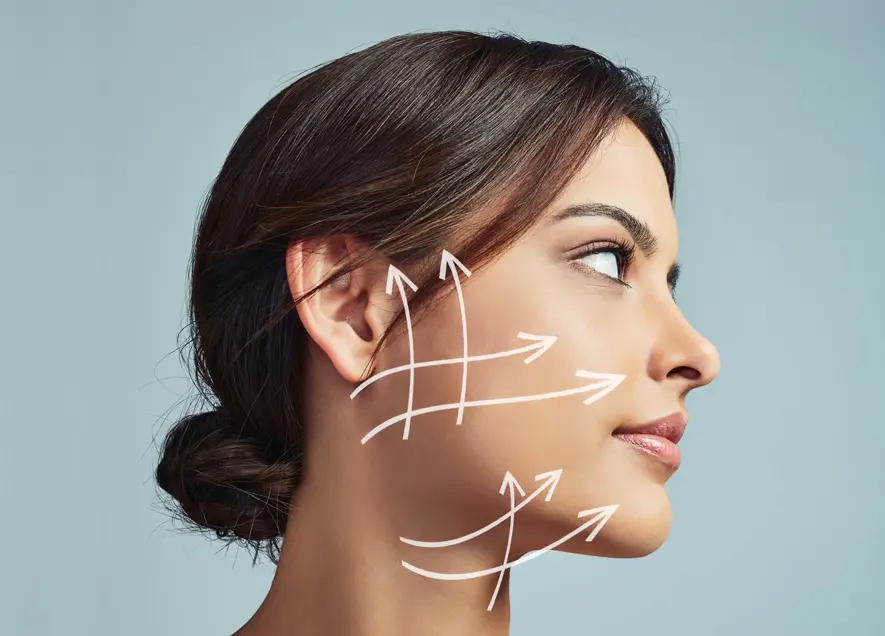

Ulthera, Thermage, Oligio, and InMode differ mainly in technology and treatment approach. Ulthera uses microfocused ultrasound, while Thermage and Oligio use radiofrequency. InMode is a platform with multiple technologies. The best choice depends on skin laxity, treatment area, goals, skin condition, and dermatologist assessment.
KoreaSkinClinic.net
Choosing between Ulthera, Thermage, Oligio, and InMode can be confusing because all four are associated with non-surgical skin tightening, yet they do not use exactly the same technology or treatment strategy. In simple terms, Ulthera uses microfocused ultrasound, while Thermage and Oligio use radiofrequency (RF). “InMode,” meanwhile, is a platform company with several technologies rather than one single lifting treatment; its RF-based options include treatments such as Forma.
Which is best depends on what you want to improve. Someone primarily concerned with mild-to-moderate laxity and structural lifting may be evaluated for microfocused ultrasound such as Ultherapy. Someone focused on skin tightening, wrinkles, or overall firmness may be considered for RF such as Thermage or Oligio. InMode can mean different things depending on the specific handpiece and platform being used, so the exact device—not simply the brand name—must be confirmed before treatment.
The American Academy of Dermatology (AAD) explains that non-invasive ultrasound and radiofrequency treatments can stimulate collagen and produce gradual tightening, but results vary by procedure, patient, and treatment plan. A proper consultation is therefore more useful than choosing a device based solely on popularity or price.
Table of Contents
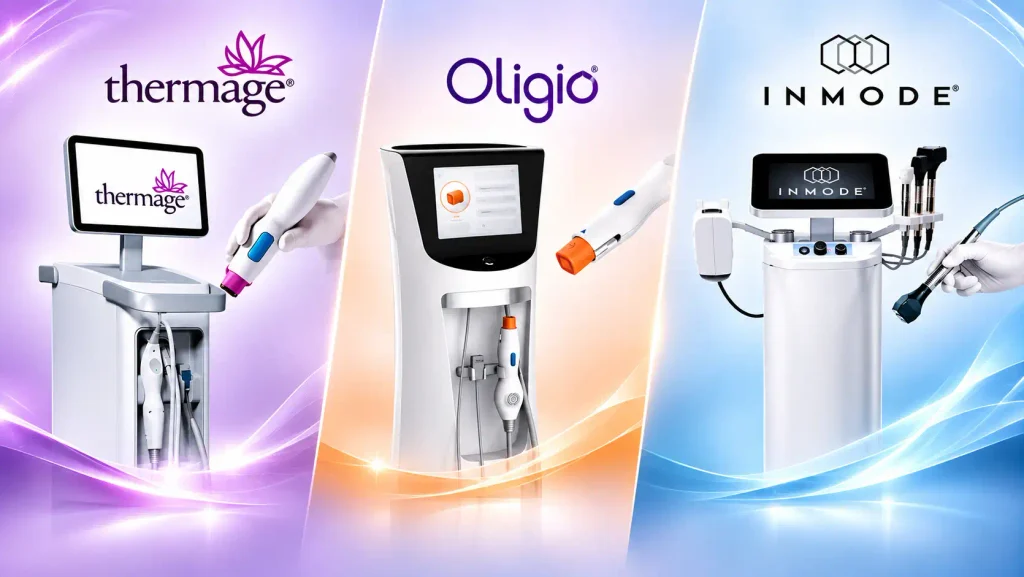
Ulthera vs Thermage vs Oligio vs InMode
Ulthera/Ultherapy uses microfocused ultrasound with real-time visualization and is designed to deliver energy at targeted tissue depths. Thermage FLX uses monopolar RF to heat tissue and support collagen remodeling. Oligio is a Korean monopolar RF system designed for skin tightening and contouring. InMode is a technology platform with several RF-based and other systems, so the exact InMode treatment must be identified before making a comparison.
At a Glance: Which Treatment May Suit Which Concern?
| Treatment | Core technology | Often considered for | Key characteristic |
|---|---|---|---|
| Ulthera / Ultherapy | Microfocused ultrasound | Laxity, lifting, jawline, brow/neck areas | Real-time visualization and targeted ultrasound energy |
| Thermage FLX | Monopolar RF | Wrinkles, firmness, skin tightening | RF collagen remodeling with cooling/vibration |
| Oligio / OligioX | Monopolar RF | Firmness, contouring, laxity | Korean RF platform with cooling and energy control |
| InMode | Varies by device | Tightening, contouring, texture or combination goals | Must identify the exact InMode technology |
This table is a general comparison, not a treatment recommendation. Device indications and regulatory clearances vary by country, and the appropriate choice depends on your anatomy, skin condition, medical history, and treatment goals.
First, Understand What “Skin Lifting” Actually Means
The term skin lifting is often used broadly in aesthetic medicine.
It can refer to several different goals:
- Improving mild skin laxity
- Creating a more defined jawline
- Reducing the appearance of wrinkles
- Improving skin firmness
- Improving the appearance of loose skin
- Supporting collagen remodeling
- Improving overall skin quality
These are not identical outcomes.
For example, a patient may say:
“I want a slimmer jawline.”
But the underlying issue could be:
- Skin laxity
- Fat accumulation
- Muscle bulk
- Bone structure
- Loss of facial volume
- A combination of these factors
An energy-based skin-tightening device cannot solve every cause of facial contour change.
That is why a dermatologist should determine what is actually causing the appearance you want to change before selecting a device.
How Non-Surgical Skin Tightening Works
Most of the technologies discussed here use controlled energy to heat targeted tissue.
The biological goal is generally related to collagen remodeling.
Collagen is a structural protein that helps provide skin with strength and firmness. As we age, collagen production and organization change, contributing to wrinkles and loss of firmness.
The AAD explains that non-invasive ultrasound can deliver heat deeper into the skin and stimulate collagen production, while non-invasive RF heats tissue beneath the skin and can produce gradual tightening as collagen remodeling occurs.
The important word is gradual.
A treatment may produce some immediate change from tissue contraction or swelling-related effects, but collagen remodeling takes time.
Therefore, judging the result immediately after treatment can be misleading.
1. Ulthera / Ultherapy: Best Known for Microfocused Ultrasound
Ultherapy is based on microfocused ultrasound with real-time visualization.
The manufacturer describes Ultherapy as a non-invasive ultrasound technology designed to lift the brow, neck, and under-chin skin and improve lines and wrinkles on the décolletage. Its real-time imaging allows the practitioner to visualize tissue layers during treatment.
How it works
Rather than delivering RF energy across a broad tissue area, microfocused ultrasound creates controlled thermal effects at targeted depths.
The treatment is designed to stimulate the body’s natural collagen response.
What makes Ultherapy different?
The most distinctive feature is real-time visualization.
The practitioner can see tissue layers during treatment, helping guide where energy is delivered.
This is one reason Ultherapy should not be reduced to simply “another tightening machine.”
Potentially suitable concerns
Ultherapy may be considered when the primary concern involves:
- Mild-to-moderate skin laxity
- Brow area
- Under-chin laxity
- Neck laxity
- Jawline definition
- Certain wrinkles
The AAD notes that ultrasound tightening generally produces gradual results, with many patients seeing modest lifting and tightening over approximately two to six months.
What to expect
Ultherapy is generally performed without surgery or needles, although treatment discomfort varies.
The manufacturer’s current information states that Ultherapy results develop over time and may last a year or more for some patients. Individual results vary.
2. Thermage FLX: RF for Firmness and Wrinkles
Thermage FLX uses monopolar radiofrequency.
Unlike Ultherapy’s focused ultrasound approach, Thermage delivers RF energy to heat tissue and support collagen remodeling.
The manufacturer describes Thermage FLX as a non-invasive RF treatment for wrinkles and rhytids, including the periorbital area, with minimal downtime.
What makes Thermage different?
Thermage has a long history in non-invasive RF skin tightening.
Its FLX system incorporates:
- RF energy
- Cooling
- Vibration
- Automatic energy calibration through AccuREP technology
- Different treatment tips for different areas
The manufacturer reports that treatment generally takes around 30–60 minutes depending on the treatment area.
Potentially suitable concerns
Thermage may be considered for:
- Fine lines
- Wrinkles
- Skin laxity
- Overall firmness
- Jawline and facial contour
- Selected body laxity
It is also specifically designed for treatment around the eyes with an appropriate eye tip.
Recovery
One attraction of Thermage is the limited downtime.
The manufacturer states that most patients return to normal activities shortly after treatment, although temporary redness or swelling can occur.
3. Oligio: A Korean Monopolar RF Option
Oligio is a Korean-developed monopolar RF platform from Wontech.
Wontech describes Oligio as a skin-lifting and contouring system using monopolar RF technology. Its newer OligioX incorporates dual-mode RF control, enhanced cooling, and real-time impedance checking.
How Oligio works
RF energy heats tissue to create a controlled thermal response.
OligioX is designed to deliver RF energy while monitoring tissue impedance and adjusting energy delivery.
The manufacturer lists indications involving the face and neck, including concerns such as:
- Fine wrinkles
- Forehead laxity
- Cheek area
- Submental area
- Nasolabial folds
- Crow’s feet
- General facial contouring
Why is Oligio popular in Korea?
Oligio is a Korean RF technology and is therefore frequently encountered in Korean aesthetic clinics.
For international patients, however, the important question is not simply:
“Is Oligio popular in Korea?”
The more useful question is:
“Is Oligio appropriate for my specific degree and pattern of laxity?”
Technology popularity does not replace medical assessment.
4. InMode: Why This Comparison Requires Extra Caution
This is where many online comparisons become misleading.
InMode is not one single treatment.
The company produces multiple aesthetic technologies.
For example, its current patient information lists Forma, which uses bipolar RF energy to improve the appearance of skin without surgery, scars, or downtime. InMode also has other technologies that combine RF with different treatment mechanisms.
Therefore, saying:
“InMode vs Thermage”
is incomplete.
You need to ask:
“Which InMode device and handpiece?”
Different InMode technologies can have different mechanisms, indications, depths, and treatment goals.
Forma
Forma uses bipolar RF to heat tissue and is designed for skin tightening and appearance improvement.
Other InMode platforms can involve additional technologies, including RF-based body contouring or minimally invasive procedures.
Consequently, a clinic quoting “InMode” without specifying the exact system is not providing enough information for a meaningful comparison.
Ulthera vs Thermage vs Oligio vs InMode: Technology Comparison
| Feature | Ulthera | Thermage FLX | Oligio | InMode |
|---|---|---|---|---|
| Main energy | Microfocused ultrasound | Monopolar RF | Monopolar RF | Depends on system |
| Real-time visualization | Yes | No equivalent imaging feature | Impedance monitoring on OligioX | Depends on system |
| Main concept | Focused thermal treatment at selected depths | RF heating and collagen remodeling | RF heating and tightening | Varies |
| Typical goal | Lifting/laxity | Firmness/wrinkles | Firmness/contouring | Depends on device |
| Downtime | Usually minimal | Usually minimal | Usually minimal | Depends on procedure |
| Best comparison | Ultrasound-based lifting | RF tightening | RF tightening | Must specify model |
| Results | Gradual | Gradual | Gradual | Device-dependent |
This comparison demonstrates why energy type alone does not determine the outcome.
Treatment depth, energy delivery, treatment area, settings, anatomy, and practitioner technique all matter.
Ulthera vs Thermage: Which Is Better?
There is no universally superior choice.
A practical distinction is:
Ulthera may make more sense when:
- The main concern is laxity
- You want a lifting-focused approach
- The brow, neck, or under-chin region is a major concern
- Real-time tissue visualization is important
Thermage may make more sense when:
- Wrinkles and firmness are major concerns
- You prefer an RF-based approach
- The eye area is part of your treatment plan
- Minimal downtime is important
The AAD recognizes both ultrasound and RF as non-invasive approaches capable of producing gradual tightening, but the expected result depends on the individual and procedure.
Thermage vs Oligio: What Is the Difference?
Both are monopolar RF technologies, so this is a more direct comparison than Ulthera versus Thermage.
However, they are not identical devices.
Thermage FLX has its own RF delivery system, cooling, vibration, and AccuREP technology.
Oligio uses Wontech’s monopolar RF system, with OligioX adding dual-mode control, cooling, and real-time impedance monitoring.
The practical difference for patients
Do not ask only:
“Which RF machine is stronger?”
Instead ask:
- What degree of laxity do I have?
- What treatment area is being addressed?
- How much energy will be delivered?
- What is the treatment protocol?
- How experienced is the practitioner with the device?
- What outcome is realistic for my anatomy?
These questions are much more clinically useful.
Oligio vs Ulthera: RF or Ultrasound?
This is a more fundamental technology comparison.
Ulthera
Microfocused ultrasound
The energy is focused at selected tissue depths and accompanied by real-time visualization.
Oligio
Monopolar RF
RF energy is delivered to heat tissue, with the OligioX system using impedance monitoring and cooling to control energy delivery.
Neither technology automatically wins.
The better choice depends on whether the patient’s main issue is better addressed by the specific treatment approach and anatomy.
InMode vs Oligio: Why the Device Model Matters
If someone asks:
“Should I choose InMode or Oligio?”
the first response should be:
Which InMode system?
For example, Forma uses bipolar RF, while other InMode systems may use different combinations of RF and other technologies.
A comparison becomes meaningful only after identifying:
- Exact InMode platform
- Handpiece
- Energy type
- Treatment depth
- Treatment area
- Intended indication
Without that information, “InMode” is too broad a category.
Which Treatment Is Best for Jawline Definition?
Jawline concerns require careful diagnosis.
A less-defined jawline may result from:
- Skin laxity
- Submental fat
- Platysmal changes
- Facial volume loss
- Masseter muscle size
- Bone structure
- Combination factors
If laxity is the dominant issue, an energy-based tightening treatment may be considered.
If excess fat is dominant, a skin-tightening device alone may not solve the problem.
If muscle bulk contributes to the appearance, a completely different treatment strategy may be appropriate.
This is why a device consultation should begin with:
“What is causing my jawline concern?”
rather than:
“Which machine should I get?”
Which Treatment Is Best for the Neck?
The neck can be challenging because skin thickness, anatomy, muscle activity, and laxity vary considerably.
Ultherapy is specifically indicated in the U.S. for lifting the neck and under-chin area, according to the manufacturer’s current information.
Thermage also offers treatment options for skin laxity and wrinkles in selected areas, while Oligio is marketed for face and neck tightening and contouring.
However, the neck contains important anatomical structures.
Treatment should therefore be performed by an appropriately qualified provider who understands facial and neck anatomy.
Which Treatment Is Best for Wrinkles?
Wrinkles have multiple causes.
They can result from:
- Collagen loss
- Skin laxity
- Repeated facial muscle movement
- Sun damage
- Volume loss
- Changes in skin hydration
Thermage is specifically indicated for non-invasive treatment of wrinkles and rhytids.
Ultherapy can also address selected lines and wrinkles while focusing on lifting and tightening.
But if wrinkles are primarily caused by facial muscle movement, an energy-based skin-tightening treatment may not be the most direct approach.
Again, the mechanism causing the wrinkle should guide treatment.
What About Skin Texture and Pores?
Skin tightening devices may improve the appearance of skin quality indirectly, but they are not interchangeable with resurfacing treatments.
If the primary concern is:
- Enlarged pores
- Acne scars
- Uneven texture
- Fine surface lines
- Sun damage
a dermatologist may consider other treatments, including lasers, microneedling, or RF microneedling.
The AAD notes that RF microneedling combines microneedling with RF heating and can stimulate collagen, but it is a distinct treatment category from non-invasive RF skin tightening.
This distinction matters because patients sometimes assume that every RF treatment produces the same effect.
It does not.
What About RF Microneedling?
This is an important safety distinction.
Non-invasive RF ≠ RF microneedling.
RF microneedling uses needles to deliver RF energy into the skin.
That makes it a minimally invasive procedure rather than a purely non-invasive surface treatment.
The AAD issued a 2025 statement concerning FDA safety communications about potential risks associated with certain uses of RF microneedling. It emphasized that these procedures require appropriate medical expertise and knowledge of anatomy.
Potential complications can be more significant when RF microneedling is performed improperly.
Therefore, when a clinic says “RF lifting,” ask exactly which technology is being used.
How Much Downtime Should You Expect?
One reason non-surgical lifting treatments are popular is that they generally involve limited downtime.
The AAD states that non-invasive skin-tightening procedures typically cause little or no downtime, although temporary redness or swelling can occur.
Typical expectations
| Treatment type | General downtime expectation |
|---|---|
| Ultherapy | Usually little downtime |
| Thermage FLX | Usually little to no downtime |
| Oligio | Usually little downtime |
| Non-invasive InMode RF | Usually little downtime |
| RF microneedling | More recovery than non-invasive RF |
These are general expectations, not guarantees.
Treatment intensity, individual sensitivity, and technique can change recovery.
Does Skin Tightening Hurt?
Pain or discomfort varies considerably.
Factors include:
- Device
- Energy settings
- Treatment area
- Individual pain threshold
- Practitioner technique
- Cooling or comfort systems
Thermage FLX incorporates vibration and cooling to help with comfort.
Ultherapy may produce sensations of heat, tingling, or discomfort during energy delivery.
Oligio’s newer systems emphasize cooling and comfort optimization.
A clinic should explain expected sensations before treatment rather than promising that a procedure will be completely painless.
How Long Do Results Take?
Non-surgical tightening generally does not behave like a facelift.
The AAD states that ultrasound-based tightening often produces gradual improvement over approximately two to six months, while RF tightening results also develop as collagen remodeling occurs.
Thermage’s manufacturer similarly states that some patients notice initial tightening followed by continued improvement over two to six months.
Ultherapy’s manufacturer reports results that develop over time and may last a year or more for some patients.
Important expectation
Do not judge a collagen-stimulating treatment solely by what you see the next morning.
Collagen remodeling is a biological process that takes time.
Can These Treatments Replace a Facelift?
No.
Non-surgical tightening can provide meaningful improvement for selected patients, but it does not reproduce the structural correction of surgical facelift or neck-lift procedures.
The AAD explicitly notes that minimally invasive and non-invasive tightening procedures cannot provide the same results as surgical procedures such as facelift, eyelid surgery, or neck lift.
A good candidate for non-surgical treatment typically wants:
- Modest improvement
- Little downtime
- No surgery
- Gradual, natural-looking change
Someone with significant excess skin may require a different discussion.
Which Treatment Is Best for Different Age Groups?

Age alone should not determine the device.
A better framework is the degree and type of laxity.
Early signs of aging
Someone with good skin elasticity and mild laxity may be considered for a less aggressive tightening approach.
Moderate laxity
A dermatologist may compare ultrasound and RF approaches based on anatomy, skin quality, and treatment goals.
Significant laxity
Energy-based treatments may provide limited improvement, and a surgical consultation may be more appropriate.
The AAD emphasizes that cosmetic treatment selection should consider the patient’s health, skin condition, desired results, and the procedure most likely to achieve those goals.
What Should International Patients Consider in Seoul?
If you are traveling to Seoul specifically for skin tightening, do not book solely from an online treatment menu.
Ask the clinic:
- Which exact device will be used?
- Is it Ultherapy/Ulthera, Thermage FLX, Oligio/OligioX, or a specific InMode system?
- How many shots, lines, or treatment passes are included?
- Which facial areas will be treated?
- Who will perform the procedure?
- What degree of laxity does the doctor think I have?
- What result is realistic for my anatomy?
- What discomfort should I expect?
- How long will recovery take?
- When can I fly after treatment?
The AAD recommends asking about the provider’s experience with your skin type and age group and requesting realistic expectations, including before-and-after photographs of comparable patients.
A Practical Seoul Patient Scenario
Consider a 48-year-old international visitor who says:
“My lower face looks heavier and my jawline isn’t as defined as it used to be.”
A device-first approach would be:
Book Ulthera.
A diagnosis-first approach would be:
Assess skin laxity → assess submental fat → evaluate facial volume → examine muscle contribution → determine whether the concern is primarily skin, fat, muscle, volume, or a combination.
If laxity is the primary problem, ultrasound or RF tightening might be considered.
If submental fat is the primary problem, tightening alone may not provide the desired contour.
If volume loss is important, an entirely different treatment strategy may be needed.
This is why experienced dermatology consultations often produce better decisions than simply choosing a machine from a menu.
How to Compare Treatment Prices Correctly
Do not compare:
“Ultherapy ₩X” vs. “Oligio ₩Y.”
Instead compare:
- Exact device
- Device generation
- Treatment area
- Number of shots/lines
- Energy settings
- Physician involvement
- Consultation
- Aftercare
- Taxes and fees
- Follow-up
For example, a 300-shot treatment and a 600-shot treatment should not be treated as equivalent simply because they have the same device name.
Likewise, “InMode” is not sufficiently specific for a price comparison because different InMode systems have different functions.
Safety: Who Should Be Extra Careful?
A medical consultation is particularly important if you have:
- An implanted electrical device
- Significant medical conditions
- Pregnancy or breastfeeding
- Active skin infection
- Recent facial surgery
- Recent injectable treatment
- Significant inflammatory skin disease
- A history of unusual scarring
- Neurologic or sensory problems
For example, the Thermage manufacturer specifically lists implanted electrical devices such as pacemakers and AICDs as contraindications for its system because RF may adversely affect them. It also provides additional precautions and warnings that should be reviewed before treatment.
Never assume that because a treatment is “non-invasive” it is automatically appropriate for everyone.
Why the Practitioner Matters More Than the Machine
A sophisticated device cannot compensate for poor patient selection or inappropriate technique.
The AAD emphasizes that cosmetic-treatment outcomes depend substantially on the skill and knowledge of the person performing the procedure and recommends qualified dermatologic care.
This is particularly important for facial treatment because practitioners must understand:
- Facial anatomy
- Nerves
- Blood vessels
- Fat compartments
- Skin thickness
- Tissue planes
- Energy delivery
- Contraindications
When choosing a Seoul clinic, therefore, consider the doctor and treatment protocol, not just the equipment list.
Which Skin-Lifting Treatment Should You Choose?
A practical decision framework is:
Choose an ultrasound-focused consultation if:
Your primary concern is lifting and laxity, particularly around areas such as the brow, neck, or under the chin, and you want a treatment using microfocused ultrasound with visualization.
Consider RF-focused treatment if:
Your main goals are firmness, wrinkles, and overall skin tightening, and a radiofrequency approach is appropriate for your skin and anatomy.
Consider Oligio if:
You are interested in a Korean monopolar RF platform and your dermatologist determines that its treatment parameters and protocol suit your goals.
Consider InMode if:
You have identified the exact InMode device and understand what technology and indication it provides.
Consider another treatment entirely if:
Your main concern is actually:
- Significant excess fat
- Major skin excess
- Severe volume loss
- Strong muscle bulk
- Deep acne scars
- Predominantly pigmentary problems
In those cases, skin tightening alone may not address the underlying cause.
FAQs

What is the difference between Ulthera vs Thermage for skin lifting?
The main difference between Ulthera vs Thermage is their energy technology. Ulthera uses microfocused ultrasound with real-time visualization, while Thermage uses radiofrequency to heat tissue and stimulate collagen remodeling. The better option depends on the degree and location of skin laxity, treatment goals, and individual anatomy rather than simply choosing the more popular treatment.
Is Oligio better than Thermage for skin tightening?
Oligio vs Thermage is primarily a comparison between two radiofrequency-based skin-tightening approaches. Oligio uses monopolar RF technology, while Thermage FLX also uses radiofrequency energy. Neither is universally better. A dermatologist should consider skin laxity, treatment area, desired level of tightening, comfort, previous treatments, and overall skin condition before recommending one.
What is the difference between InMode and Ulthera?
InMode vs Ulthera can be difficult to compare because InMode is a platform that includes multiple technologies, whereas Ulthera is a specific microfocused ultrasound system. Some InMode treatments use radiofrequency technology and are designed for different aesthetic concerns. Patients should ask the clinic to identify the exact InMode device and treatment modality being recommended.
Which treatment is best for sagging skin: Ulthera, Thermage, Oligio, or InMode?
There is no single best skin-lifting treatment for everyone. Ulthera, Thermage, Oligio, and InMode work differently and may be selected according to skin laxity, facial structure, treatment area, age-related changes, and aesthetic goals. A dermatologist-led consultation can help determine whether ultrasound, monopolar RF, or another technology is appropriate.
How do I choose between Ulthera vs Thermage vs Oligio vs InMode in Seoul?
When comparing Ulthera vs Thermage vs Oligio vs InMode in Seoul, look beyond price and treatment names. Ask about the exact device, energy technology, treatment area, provider qualifications, expected results, potential side effects, downtime, and follow-up care. An individualized assessment is more useful than selecting a treatment based solely on online popularity or promotional pricing.
Ulthera vs Thermage vs Oligio vs InMode: Bottom Line
There is no universal winner.
Ulthera/Ultherapy stands out for microfocused ultrasound with real-time visualization and a lifting-focused treatment concept.
Thermage FLX is a long-established monopolar RF system focused on wrinkles and skin tightening, with cooling and vibration designed to improve treatment comfort.
Oligio is a Korean monopolar RF platform for skin lifting and contouring, with OligioX adding features such as dual-mode control, cooling, and impedance monitoring.
InMode is different because it represents a family of technologies. The exact platform and handpiece must be identified before comparing it with a specific device such as Thermage or Ultherapy.
The most reliable way to choose is therefore:
Identify the problem → assess your skin and anatomy → compare technologies → understand risks and downtime → choose the treatment that matches your goal.
A non-surgical lifting treatment should improve what is realistically treatable without promising the structural results of surgery. The AAD emphasizes that expectations, patient selection, treatment parameters, and practitioner expertise are central to achieving a safe and satisfactory result.
For international patients considering treatment in Seoul, this approach is especially valuable: choose the medical plan first and the machine second.