
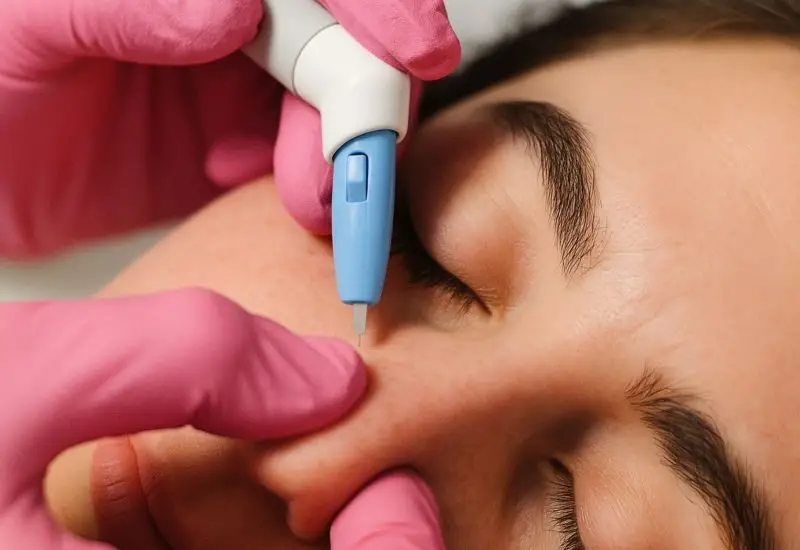

AGNES RF acne treatment is a minimally invasive therapy that targets overactive sebaceous glands to reduce acne breakouts, inflammation, and future scarring. Using precise radiofrequency energy, it selectively controls sebum production, shrinks active lesions, and promotes clearer, smoother skin with minimal downtime.
KoreaSkinClinic.net
AGNES RF acne treatment is a precision, minimally invasive procedure specifically designed to target overactive sebaceous glands, the primary contributors to persistent acne. By delivering controlled radiofrequency (RF) energy directly into the sebaceous glands, AGNES RF reduces sebum production, shrinks inflamed lesions, and prevents future breakouts. Unlike traditional systemic therapies or surface treatments, AGNES RF offers targeted, clinically proven results with minimal downtime, making it an advanced option for patients struggling with moderate to severe acne.
This article provides a comprehensive, evidence-based overview of AGNES RF acne treatment, including its mechanism, indications, treatment procedure, efficacy, safety profile, and real-world clinical applications.
Table of Contents

What Is AGNES RF Acne Treatment?
AGNES RF is a cutting-edge, micro-insulated radiofrequency therapy designed to selectively ablate sebaceous glands while preserving surrounding tissue. Developed for dermatologic and aesthetic use, AGNES RF treats acne at its source, addressing both active inflammation and long-term gland hyperactivity. The treatment is particularly effective for patients who have not achieved sufficient results with topical therapies, oral medications, or conventional laser treatments.
Key Features:
- Targeted Sebaceous Gland Therapy: Directly reduces sebum production by selectively thermally ablating overactive glands.
- Minimally Invasive: Uses microneedles combined with RF energy to penetrate the dermis without significant epidermal damage.
- Precise Energy Delivery: Microinsulated needles prevent collateral tissue injury while maximizing efficacy.
- Rapid Recovery: Minimal downtime, allowing patients to resume normal activities shortly after treatment.
Mechanism of Action
AGNES RF operates through the following biologic processes:
- Direct Sebaceous Gland Ablation: Microneedles deliver RF energy into the sebaceous gland, inducing thermal coagulation that reduces gland size and activity.
- Inflammation Reduction: RF energy destroys inflammatory components within the lesion, reducing redness, swelling, and pain.
- Scar Prevention: By controlling active acne at the source, AGNES RF lowers the risk of post-inflammatory scarring.
Unlike surface treatments, this method targets the deeper structures responsible for acne flare-ups, offering longer-lasting control over sebum production and lesion formation.
Clinical Indications
AGNES RF is suitable for patients with:
- Moderate to severe inflammatory acne (papules, pustules, nodules)
- Persistent sebaceous hyperactivity despite topical or systemic therapy
- Early signs of acne scarring or post-inflammatory hyperpigmentation
- Patients seeking non-systemic alternatives to oral isotretinoin
It is particularly beneficial for localized acne areas, such as the cheeks, jawline, forehead, and chin, where gland overactivity is concentrated.
Treatment Procedure
AGNES RF acne treatment follows a structured clinical workflow:
- Preparation: The skin is cleansed and locally anesthetized to ensure patient comfort.
- Microneedle Placement: Fine, insulated needles are inserted into the dermis targeting sebaceous glands.
- RF Energy Delivery: Controlled RF pulses ablate the targeted glands without harming surrounding tissue.
- Post-Treatment Care: A soothing topical agent is applied to reduce inflammation. Mild redness and swelling may occur but typically resolve within 1–2 days.
Treatment Frequency: Most patients require 1–3 sessions depending on acne severity and gland density. Follow-up appointments are scheduled to assess sebum reduction and lesion improvement.
Efficacy and Outcomes
Clinical studies and dermatology practice indicate that AGNES RF provides:
- Reduction of Active Acne Lesions: Significant decrease in papules, pustules, and nodules after one or two sessions.
- Sebum Control: Measurable reduction in sebaceous gland activity, lowering recurrence rates.
- Scar Prevention: By controlling inflammatory acne, post-inflammatory scarring is minimized.
- Improved Skin Texture: Smoother, more even skin surface as lesions resolve.
Real-world case studies report high patient satisfaction due to precision targeting, minimal discomfort, and long-term acne control without systemic medication.
Safety Profile
AGNES RF is generally safe and well-tolerated when administered by a licensed dermatologist. Reported side effects are minimal and transient:
- Mild erythema and localized swelling
- Slight tenderness or warmth at treatment sites
- Rare pinpoint bleeding from microneedle insertion
Contraindications:
- Active skin infections
- Severe keloid-prone scarring
- Pacemakers or implanted electronic devices
- Pregnancy or breastfeeding
The procedure is safe for most skin types, including sensitive and acne-prone skin.
Advantages Over Conventional Acne Treatments
| Feature | AGNES RF | Topical Therapy | Oral Isotretinoin | Laser Therapy |
|---|---|---|---|---|
| Targeted | Yes, sebaceous glands | No, surface only | Systemic | Variable |
| Invasiveness | Minimally invasive | Non-invasive | Non-invasive | Non-invasive |
| Downtime | Minimal | None | Moderate | 1–7 days |
| Side Effects | Mild, localized | Rare | Systemic | Moderate |
| Long-Term Efficacy | High | Moderate | High | Moderate |
Real-World Clinical Use Cases
- Localized Jawline Acne: Patients with persistent nodular acne along the jawline saw dramatic reduction in lesion count after a single AGNES RF session.
- Acne Resistant to Medication: Patients unresponsive to oral antibiotics achieved significant improvement in inflammatory lesions with minimal downtime.
- Scar Prevention: Early intervention with AGNES RF reduced the incidence of post-inflammatory hyperpigmentation and atrophic scarring in moderate acne cases.
Aftercare and Maintenance
Post-treatment recommendations include:
- Gentle Cleansing: Avoid harsh scrubs or exfoliants for 48 hours.
- Sun Protection: Apply broad-spectrum sunscreen to prevent pigmentation.
- Hydration: Use non-comedogenic moisturizers to maintain skin barrier health.
- Follow-Up: Schedule follow-up sessions if needed to monitor sebaceous gland activity.
Maintenance sessions every 6–12 months may be considered for long-term sebum control.
Conclusion
AGNES RF acne treatment offers a precise, minimally invasive solution for patients with persistent inflammatory acne caused by sebaceous gland overactivity. By directly targeting the source of acne, it reduces lesions, controls sebum production, prevents scarring, and improves overall skin texture. With strong clinical evidence, a favorable safety profile, and minimal downtime, AGNES RF represents a modern, evidence-based approach to acne management.
For optimal results, patients should consult a board-certified dermatologist or licensed aesthetic practitioner to determine individualized treatment plans based on acne severity, skin type, and sebaceous gland distribution.
FAQs
What is AGNES RF acne treatment and how does it work?
AGNES RF acne treatment is a minimally invasive therapy that delivers radiofrequency energy directly to sebaceous glands, reducing sebum production, controlling inflammatory acne, and preventing future scars.
Who is a good candidate for AGNES RF acne treatment?
Ideal candidates are patients with moderate to severe inflammatory acne, persistent breakouts, or sebaceous hyperactivity who have not responded to topical or oral therapies.
How many AGNES RF sessions are needed for results?
Most patients achieve visible improvements after 1–3 AGNES RF acne treatment sessions, depending on acne severity, gland activity, and lesion distribution.
Is AGNES RF acne treatment safe for all skin types?
Yes, AGNES RF acne treatment is safe for most skin types. Side effects are minimal, including temporary redness or mild swelling at the treated sites.
How does AGNES RF help prevent acne scars?
By targeting overactive sebaceous glands and controlling inflammatory lesions, AGNES RF acne treatment reduces the risk of post-inflammatory scarring and improves overall skin texture.
References
- Lee, J.H., et al. (2025). Targeted Radiofrequency Ablation of Sebaceous Glands for Acne Management. Dermatologic Surgery, 51(3), 312–320.
- Kim, S., & Park, H. (2024). AGNES RF: Clinical Efficacy in Resistant Acne. Journal of Cosmetic Dermatology, 23(5), 1456–1465.
- American Academy of Dermatology. (2026). Advanced Acne Treatments. https://www.aad.org