
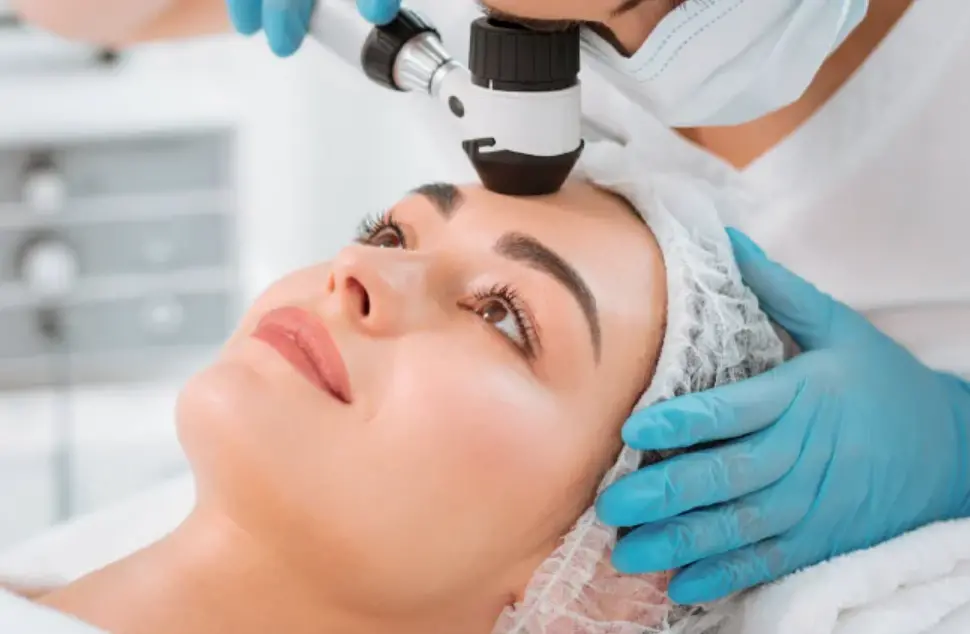

A typical Korean dermatology clinic visit includes appointment check-in, medical history, skin analysis or examination, dermatologist consultation, treatment recommendation, informed consent, the procedure, aftercare, and follow-up planning. Foreign patients should also confirm language support, treatment costs, expected downtime, travel considerations, and how to access follow-up care.
KoreaSkinClinic.net
For foreign patients, visiting a Korean dermatology clinic in Seoul is usually more structured than simply arriving and choosing a treatment from a menu. A typical visit can involve appointment confirmation, registration, skin analysis or examination, consultation with a dermatologist, treatment selection, the procedure itself, aftercare instructions, and follow-up planning. The exact process varies by clinic and treatment, but the medical decision should come after an assessment of your skin and goals, not before.
This distinction matters because cosmetic dermatology is still medical care. The American Academy of Dermatology (AAD) recommends asking about the provider’s qualifications, experience with the specific procedure and skin type, expected results, risks, alternatives, downtime, preparation, aftercare, and cost before treatment. For international patients, the CDC also recommends researching the facility and clinician in advance, understanding follow-up arrangements, and obtaining copies of medical records before returning home.
Table of Contents

What Happens at a Korean Dermatology Clinic?
A typical visit to a Korean dermatology clinic in Seoul follows several stages: booking and check-in → medical history and skin assessment → dermatologist consultation → treatment recommendation → informed decision → procedure → aftercare → follow-up planning. International clinics may also provide language assistance, online booking, digital skin analysis, and treatment records, but the exact process differs by clinic.
The most important step is the dermatologist consultation, because the appropriate treatment depends on your diagnosis, skin condition, medical history, treatment goals, and tolerance for downtime.
Step 1: Research the Clinic Before You Arrive
Your dermatology appointment actually begins before you enter the clinic.
Seoul has a large number of dermatology and aesthetic clinics, and international patients can encounter very different models of care. Some clinics focus primarily on medical dermatology, some on cosmetic procedures, and some combine dermatology with high-volume aesthetic services.
When comparing clinics, look beyond photographs and promotional treatment lists.
Check the following:
- Who is responsible for diagnosis?
- Is a dermatologist involved in the consultation?
- Who performs the procedure?
- Does the provider have experience with your skin type?
- What treatments does the clinic actually provide?
- How are complications managed?
- Is interpretation available?
- What happens if you need follow-up?
- What information is provided after treatment?
The AAD specifically recommends asking about the clinician’s qualifications and experience with the exact procedure, as well as experience treating people with your skin tone and type.
For international medical care, the CDC similarly recommends researching both the facility and the healthcare professional rather than relying solely on online marketing or recommendations.
Step 2: Book Your Appointment
International patients should ideally arrange an appointment before arriving in Seoul.
Depending on the clinic, booking may be available through:
- An online booking form
- KakaoTalk
- LINE
- International patient coordinators
You may be asked to provide:
- Full name
- Contact information
- Date of birth
- Preferred appointment date
- Skin concerns
- Desired treatment
- Previous treatment history
- Passport or identification information, depending on clinic requirements
Why describe your concern before arrival?
If you tell the clinic that your main concern is melasma, for example, the staff can potentially schedule the appropriate consultation rather than treating your request simply as a generic “laser appointment.”
Likewise, if your concern is:
- Acne
- Acne scars
- Pigmentation
- Hair loss
- Facial redness
- Sagging skin
- Fine lines
- Enlarged pores
the clinical assessment may lead to very different treatment options.
Example: D&A Dermatology’s International Booking Process
As one example of how an international-focused Korean dermatology clinic structures the process, D&A Dermatology Clinic in Gangnam states that international patients complete an online booking process, receive appointment information through a patient dashboard, and confirm the booking according to the clinic’s deposit policy.
The clinic states that appointments are operated on an appointment basis and that a KRW 50,000 deposit is currently required to confirm a booking. It also says the deposit can be paid through Alipay, WeChat Pay, PayPal, or Wise, subject to its current policy.
These details are clinic-specific, so international patients should always confirm current booking and payment policies directly with the clinic.
Step 3: Arrive and Complete Check-In
When you arrive, the first stage is usually administrative rather than medical.
You may need to:
- Confirm your appointment.
- Provide identification or registration information.
- Complete medical questionnaires.
- Confirm your contact information.
- Explain your primary concerns.
- Review consent or treatment documentation.
If you do not speak Korean, this is a good time to confirm whether an interpreter or English-speaking staff member is available.
Don’t be embarrassed about asking for clarification
Medical terminology can be confusing even in your native language.
If someone tells you that you are a candidate for a particular laser or injectable, make sure you understand:
- What it treats
- Why it is being recommended
- What the alternatives are
- How many sessions may be needed
- What the downtime is
- What complications are possible
- What the total cost includes
The AAD emphasizes that a cosmetic consultation should provide information about the procedure’s indications, risks, benefits, and alternatives so that patients can make an informed decision.
Step 4: Skin Analysis or Dermatologic Examination
Many Korean dermatology clinics use digital skin-analysis systems as part of the consultation process.
A skin analyzer may photograph the face under different lighting conditions to help visualize characteristics that are not always obvious under normal room lighting.
Depending on the system, analysis may examine:
- Pigmentation
- UV-related damage
- Fine lines
- Pores
- Oil levels
- Hydration
- Redness
- Texture
However, a skin-analysis machine is not a substitute for a dermatologist’s clinical diagnosis.
The photographs can provide useful information, but the dermatologist should interpret the findings together with:
- Your medical history
- Physical examination
- Skin appearance
- Symptoms
- Previous treatments
- Current medications
- Treatment objectives
Example: MarkVue at D&A Dermatology
D&A Dermatology states that its international patient process begins with a MarkVu skin analysis, followed by a consultation with a dermatologist who recommends treatment according to the patient’s concerns. The clinic also states that English and Chinese interpretation are available.
This is an example of a clinic-specific workflow rather than a universal requirement at every Korean dermatology clinic.
Step 5: Meet the Dermatologist
This is arguably the most important part of your appointment.
A dermatologist should establish what you are actually trying to treat before recommending a procedure.
For example, “dark spots” could represent:
- Melasma
- Post-inflammatory hyperpigmentation
- Solar lentigines
- Freckles
- Other pigmentary disorders
Likewise, “sagging skin” could involve:
- Skin laxity
- Volume loss
- Changes in facial fat distribution
- Muscle-related changes
- Combination aging
The treatment should follow the diagnosis.
What Should You Tell the Dermatologist?
Be completely honest about your medical and cosmetic history.
Tell the dermatologist about:
Previous procedures
- Laser treatments
- IPL
- Chemical peels
- Microneedling
- RF treatments
- Ultrasound treatments
- Botox
- Dermal fillers
- Thread procedures
- Surgical procedures
Current medications
Include:
- Prescription medications
- Over-the-counter medicines
- Supplements
- Herbal products
- Topical medications
Skin history
Mention:
- Melasma
- Acne
- Eczema
- Rosacea
- Cold sores
- Abnormal scarring
- Previous laser reactions
- Hyperpigmentation after injuries
The AAD recommends providing information about medical conditions, medications, and relevant treatment history during cosmetic consultations.
Step 6: Discuss Your Treatment Goals
Instead of saying:
“I want Korean glass skin.”
try to describe the actual problem.
For example:
“I have brown patches on my cheeks that become darker after sun exposure.”
or:
“My main concern is mild lower-face laxity, but I don’t want significant downtime.”
or:
“I have acne scars and want to improve texture without aggressive resurfacing.”
Specific goals make it easier for the dermatologist to determine whether your preferred treatment is appropriate.
The AAD recommends identifying your desired outcome and discussing how much downtime and risk you are willing to accept before choosing a cosmetic procedure.
Step 7: Receive a Treatment Recommendation
After the consultation, the dermatologist may recommend:
- One treatment
- A combination of treatments
- A series of treatments
- A non-procedural approach
- A different procedure from the one you initially requested
- No treatment at that visit
That last possibility is important.
A medically appropriate consultation does not have to end with a procedure.
If the dermatologist believes that a treatment is unlikely to help—or that your skin is not currently suitable—the recommendation may be to postpone, modify, or avoid it.
That is a normal part of medical decision-making.
Common Dermatology Treatments Foreign Patients Ask About
Laser and Light Treatments
These may be considered for concerns such as:
- Pigmentation
- Redness
- Acne-related problems
- Selected scars
- Photoaging
- Hair removal
But “laser treatment” is not one procedure.
Different wavelengths and treatment parameters target different structures in the skin.
The AAD emphasizes that laser treatments can carry risks, particularly for darker skin, and recommends appropriate professional assessment.
Skin Tightening
Korean dermatology clinics may offer energy-based treatments involving:
- Ultrasound
- Radiofrequency
- Other energy technologies
The appropriate choice depends on whether the primary concern is laxity, texture, volume, wrinkles, or another issue.
Do not assume that the most expensive or newest device is automatically the best choice.
Botox
Botulinum toxin is used to temporarily reduce the appearance of certain dynamic wrinkles by affecting targeted muscles.
The AAD emphasizes that safe injection requires detailed medical knowledge of anatomy and recommends receiving injections from an appropriately qualified medical professional.
Before treatment, ask:
- Who will perform the injections?
- What areas will be treated?
- How many units are planned?
- What result is realistic?
- What side effects are possible?
- When will results become apparent?
- When might a follow-up be needed?
Dermal Fillers
Fillers can restore or alter volume in selected facial areas.
However, they should not be treated as a simple beauty-service purchase.
Patients should understand:
- Product type
- Treatment area
- Amount being used
- Expected swelling
- Bruising
- Potential complications
- Follow-up arrangements
For international patients, it is particularly useful to obtain the product name and treatment documentation before leaving Korea.
Step 8: Review the Cost Before Treatment
International patients should understand the total expected cost, not simply the advertised starting price.
Ask whether the quoted price includes:
- Consultation
- Skin analysis
- Procedure
- Anesthesia or numbing
- Aftercare products
- Follow-up
- Additional treatment areas
- Taxes, where applicable
Also ask whether the treatment price changes depending on:
- Energy level
- Number of shots
- Treatment area
- Product quantity
- Number of sessions
The CDC recommends that medical tourists understand which services are included in the procedure cost and whether follow-up care carries additional fees.
Step 9: Give Informed Consent
Before treatment, you should understand what you are agreeing to.
Depending on the procedure, consent information may cover:
- Treatment purpose
- Expected results
- Common side effects
- Potential complications
- Alternatives
- Downtime
- Aftercare
- Limitations of treatment
Do not feel pressured to sign immediately if you do not understand something.
A useful question is:
“Can you explain the main risks and what I should expect during recovery?”
If interpretation is being used, ask the interpreter to clarify unfamiliar medical terms rather than simply translating quickly.
Step 10: The Procedure
The procedure itself depends entirely on what you are receiving.
A laser appointment may involve:
- Cleansing
- Photography
- Protective eyewear
- Topical anesthesia, if needed
- Device preparation
- Treatment
- Cooling or soothing
- Post-treatment skincare
An injectable appointment may involve:
- Cleansing
- Treatment planning
- Marking
- Antiseptic preparation
- Injection
- Compression or cooling
- Aftercare instructions
A dermatologist may modify the treatment during the procedure depending on how your skin responds.
Step 11: Understand What Normal Recovery Looks Like
After treatment, you should know what is expected.
Depending on the procedure, temporary effects can include:
- Redness
- Swelling
- Warmth
- Tenderness
- Bruising
- Peeling
- Temporary sensitivity
The important question is:
What is expected, and what is abnormal?
Ask the clinic to explain the warning signs that require medical attention.
Step 12: Receive Aftercare Instructions
Aftercare is part of the treatment—not an optional extra.
Depending on your procedure, you may be instructed to:
- Use a specific cleanser
- Apply moisturizer
- Use sunscreen
- Avoid direct sun exposure
- Avoid intense exercise temporarily
- Avoid alcohol temporarily
- Avoid saunas or hot environments
- Stop certain skincare ingredients temporarily
- Avoid picking or scratching treated skin
The AAD recommends asking how to prepare for a cosmetic procedure and how to care for the skin afterward.
Step 13: Plan Around Your Flight Home
This is particularly important for foreign patients.
Do not assume:
“It’s a non-surgical treatment, so I can fly immediately.”
Travel suitability depends on the procedure.
The CDC notes that medical tourists need to consider the interaction between medical procedures, long flights, and typical vacation activities. It also recommends arranging follow-up care before traveling.
Before your appointment, tell the dermatologist:
“My flight leaves Seoul on [date]. Is this treatment appropriate given my travel schedule?”
That information may change the recommended procedure or timing.
Why Your Seoul Itinerary Matters
A patient recovering from dermatologic treatment should not necessarily plan:
Laser treatment → sauna → long day of sightseeing → alcohol → beach → overnight flight
Recovery requirements may conflict with typical tourist activities.
The CDC specifically warns that sunbathing, swimming, strenuous exercise, alcohol consumption, and long tours during recovery can delay or interfere with healing.
A better approach is:
Treatment → protected recovery → follow-up → departure
Step 14: Obtain Your Treatment Records
Before returning home, request documentation of your treatment.
Ideally, keep:
- Diagnosis or treatment indication
- Procedure name
- Device name
- Treatment date
- Treatment area
- Product name, for injectables
- Product lot information when available
- Aftercare instructions
- Prescriptions
- Clinic contact information
The CDC Yellow Book specifically recommends that medical tourists obtain copies of overseas medical records in English and provide them to healthcare professionals involved in follow-up care.
This becomes extremely valuable if you develop a problem after returning home.
Step 15: Know What to Do If Something Goes Wrong
Most patients hope everything goes smoothly, but international medical planning should include a contingency plan.
Contact the treating clinic promptly if you experience unexpected symptoms.
Seek medical attention if you develop potentially serious signs such as:
- Severe or worsening pain
- Significant swelling
- Blistering
- Pus or drainage
- Fever
- Spreading redness
- Severe skin discoloration
- Vision or eye symptoms after periocular treatment
- Other symptoms that concern you
The CDC advises medical tourists not to delay care when they suspect a complication during travel or after returning home.
What Is Different for Foreign Patients?
International patients face several additional considerations.
Language
Even when English-speaking staff are available, medical terminology can still create misunderstandings.
Ask for clarification whenever necessary.
Time constraints
A local patient may be able to return for multiple follow-up appointments.
A visitor may have only three or four days.
Long-distance travel
A long-haul flight can make recovery more complicated.
Follow-up at home
Your Korean dermatologist may not be able to examine you once you return to your country.
Medical records
You need enough documentation for another doctor to understand what was done.
The CDC emphasizes continuity of care and recommends arranging follow-up before international medical travel.
What Does a Typical First Visit Look Like?
A simplified patient journey looks like this:
1. Book appointment
↓
2. Check in
↓
3. Medical history
↓
4. Skin analysis/examination
↓
5. Dermatologist consultation
↓
6. Diagnosis and treatment options
↓
7. Cost and treatment discussion
↓
8. Consent
↓
9. Procedure
↓
10. Aftercare
↓
11. Follow-up/travel planning
This process can vary considerably between clinics and procedures.
Example: A Foreign Patient Visiting a Gangnam Dermatology Clinic
Imagine a visitor from the United States arrives in Seoul with three concerns:
- Brown pigmentation
- Mild facial laxity
- Fine lines
The patient has only five days remaining in Korea.
Rather than immediately purchasing three procedures, a medically responsible consultation would first determine:
- Whether the pigmentation is melasma or another condition
- Whether the laxity is suitable for non-surgical treatment
- Whether the fine lines are dynamic or static
- What procedures have appropriate downtime
- Whether treatment can safely be completed before the flight
The final plan might be very different from the patient’s original wish list.
That is precisely why consultation should precede treatment selection.
Example of an International Patient Workflow at D&A Dermatology
D&A Dermatology Clinic in Gangnam states that it serves both Korean and international patients and describes a workflow involving MarkVu skin analysis followed by dermatologist assessment and treatment recommendation. The clinic states that it is led by a dermatologist with more than 20 years of experience and offers English and Chinese interpretation for international patients.
The clinic is located on the 6th floor of Hosan Hospital at 871 Eonju-ro, Gangnam-gu, Seoul, according to its English-language website.
For international visitors, the clinic currently states that advance booking is recommended and provides online booking as well as contact options including KakaoTalk, WeChat, LINE, and WhatsApp.
These are specific policies and services of D&A Dermatology, not universal features of every Korean dermatology clinic.
D&A Dermatology Clinic — International Booking
How to Make Your Korean Dermatology Visit More Efficient
International patients can save time by preparing before arriving.
Before your trip
Prepare:
- Photos of your skin concern
- Previous treatment records
- Medication list
- Allergy information
- Desired treatment goals
- Arrival and departure dates
Before the consultation
Write down your five most important questions.
During the consultation
Ask:
- What is the diagnosis?
- Why do you recommend this treatment?
- What are the alternatives?
- What are the risks?
- How much downtime should I expect?
- How many sessions might I need?
- Can I fly afterward?
- What happens if I have a complication?
After treatment
Request:
- Written aftercare
- Treatment records
- Product/device information
- Follow-up instructions
- Emergency contact information
This approach is consistent with AAD guidance encouraging patients to ask about qualifications, procedure experience, realistic results, risks, recovery, preparation, aftercare, and cost.
What Foreign Patients Should Not Assume
There are several common misconceptions about Korean dermatology.
“The most popular treatment is the best treatment.”
Not necessarily.
“More procedures mean better results.”
Not necessarily.
“A famous device is automatically appropriate for my skin.”
No. Device choice and treatment parameters must match the diagnosis and patient.
“No surgery means no medical risk.”
Incorrect. Cosmetic procedures still carry medical risks.
“I can decide the treatment before seeing the dermatologist.”
You can research options, but the final treatment decision should follow professional assessment.
“I don’t need follow-up because I’m returning home.”
International patients may actually need more follow-up planning because the treating clinician is far away after departure.
Korean Dermatology Clinic Checklist for Foreign Patients
Before treatment, make sure you can answer yes to these questions:
☐ Do I know who will perform the treatment?
☐ Have I discussed my medical history?
☐ Have I disclosed medications and supplements?
☐ Do I understand my diagnosis?
☐ Do I understand why this treatment was recommended?
☐ Do I know the alternatives?
☐ Do I understand the major risks?
☐ Do I know the expected downtime?
☐ Do I know whether I can fly afterward?
☐ Do I know what aftercare is required?
☐ Do I know how to contact the clinic?
☐ Will I receive treatment documentation?
If several answers are “no,” it is reasonable to ask more questions before proceeding.
FAQs

What happens when I visit a Korean dermatology clinic for the first time?
A first visit to a Korean dermatology clinic generally includes registration, medical history, skin analysis or examination, and a dermatologist consultation. For Korean dermatology for foreign patients, the doctor should discuss your concerns, treatment options, potential risks, expected downtime, and aftercare before you decide whether to proceed.
Do Korean dermatology clinics in Seoul treat foreign patients?
Many Seoul dermatology clinics provide services for international visitors, although language support and booking procedures vary. When choosing Korean dermatology for foreign patients, check whether the clinic offers English or other language assistance, international booking, clear pricing information, treatment documentation, and follow-up support.
Do I need a consultation before dermatology treatment in Seoul?
A consultation is important before dermatology treatment in Seoul because the same skin concern can have different causes and may require different treatments. At a Korean dermatology clinic, a dermatologist can assess your skin, review your medical history, explain treatment alternatives, and determine whether your preferred procedure is appropriate.
How much does treatment at a Korean dermatology clinic cost?
The cost at a Korean dermatology clinic varies according to the procedure, treatment area, device, dosage, number of sessions, and clinic. Foreign patients should ask for the total expected cost of dermatology treatment in Seoul, including consultation, anesthesia or numbing when applicable, products, and follow-up fees.
What should foreign patients ask before dermatology treatment in Seoul?
Before dermatology treatment in Seoul, foreign patients should ask who performs the procedure, why it is recommended, expected results, potential complications, downtime, aftercare, total cost, and follow-up arrangements. When choosing Korean dermatology for foreign patients, also confirm language support and what to do if you experience a problem after returning home.
Final Takeaway: What Should Foreign Patients Expect at a Korean Dermatology Clinic?
A visit to a Korean dermatology clinic in Seoul should be more than choosing a treatment from a price list. A well-organized medical visit generally involves registration, skin assessment, dermatologist consultation, diagnosis, treatment planning, informed consent, the procedure, aftercare, and follow-up planning.
For international patients, the most important part is the consultation. Your treatment should reflect your actual skin condition, medical history, goals, skin type, recovery window, and travel schedule.
The AAD recommends evaluating provider qualifications and experience, asking about realistic outcomes and risks, and understanding recovery and aftercare before cosmetic procedures. The CDC’s 2026 Yellow Book similarly emphasizes advance research, continuity of care, medical records, and planning for complications when receiving healthcare abroad.
If you are traveling to Seoul specifically for dermatology, think of your appointment as a medical consultation first and a cosmetic treatment second.
That mindset can help you make better decisions, avoid unnecessary procedures, plan your recovery realistically, and return home with the information needed for continued care.